Buffalo's winters are among the most demanding in the United States, with the city averaging around 95 inches of snow per year thanks to frequent lake-effect snow events. For many properties, this means weeks of snow cover, repeated thaw-freeze cycles, and several storms that drop many inches of snow in a single day.
This winter reality affects not only driveways and sidewalks but also artificial turf lawns, which may seem tough but can be vulnerable to the wrong snow-removal approach.
Artificial turf is designed to withstand cold and retain its appearance even under snow, but that resilience only goes so far. Improper snow clearing can lead to compressed fibers, drainage issues, and stress on the turf backing, shortening the performance life of an otherwise durable surface.
That makes artificial turf snow removal more than a seasonal chore; it's a preventative care task that protects a significant home investment. This guide explains how to remove snow from turf safely, what tools and methods protect the fibers, and when it makes sense to bring in professionals.
Artificial turf is built to handle cold temperatures, but winter stress in Buffalo comes from weight, moisture, and repetition, not just snow itself. Understanding what actually happens beneath the surface helps explain why handling snow on turf the right way matters.
1) Snow Weight and Fiber Compression
Heavy, wet lake-effect snow puts steady pressure on turf fibers. When that snow sits for days or gets walked on repeatedly, the fibers can compress and lose their upright position. Unlike natural grass, turf does not self-repair once fibers are flattened. Poor snow cleanup habits can leave turf looking worn long before its expected lifespan.
2) Ice Buildup and Backing Stress
Ice is often more damaging than snow. Meltwater that refreezes can lock fibers together and add strain to the turf backing. Over time, this freeze-thaw cycle can weaken seams, reduce flexibility, and interfere with proper drainage. This is why safe snow removal for grass does not always translate to turf, especially when ice is involved.
3) Drainage Issues During Thaw Cycles
Artificial turf relies on consistent drainage to perform well year-round. When snow is piled incorrectly or ice blocks drainage points, meltwater has nowhere to go. That trapped moisture refreezes, increasing surface hardness and raising the risk of backing damage. Buffalo's frequent mid-winter thaws make this a common issue.
4) Foot Traffic Makes It Worse
Snow-covered turf that sees frequent foot traffic compacts faster than turf left untouched. Repeated walking presses snow and ice deeper into the fibers, increasing matting and making snow cleanup for turfgrass more difficult later. Clearing early and limiting traffic go a long way toward preserving the surface.
Also Read: Expert Lawn Care Tips for a Healthy, Green Yard
Knowing what causes winter damage is only useful if it informs what you do next. The next step is to decide where to start snow clearing for the turf.
Before picking up a shovel or pushing snow aside, the first step in artificial turf snow removal is deciding whether removal is actually needed. In Buffalo, timing and conditions matter just as much as technique.
Not all snow should be cleared immediately.
If snow is under a few inches and there is no foot traffic, allowing it to melt naturally can be the safest option.
Compaction causes more damage than snow weight alone. Once snow is walked on or driven over, it presses deep into the turf and becomes harder to remove without scraping.
Early clearing helps:
This is one of the most effective forms of safe snow clearing for turf, especially during back-to-back Buffalo storms.
Artificial turf handles cold well, but winter foot traffic accelerates wear when snow is present. Paths across turf should be avoided until snow is removed or compacted areas are gently loosened.
For properties where access is unavoidable, clearing narrow walk paths first helps reduce widespread compression.
Clearing snow during the warmest part of the day, even by a few degrees, reduces ice bonding and makes handling snow on turf easier. Midday removal often requires less force and lowers the risk of fiber damage.
Starting with these steps sets the foundation for removing snow from turf safely and avoids the most common winter mistakes before tools even come into play.
Unsure when to clear snow and when to leave it alone? Percy's Lawn Care helps homeowners set realistic snow-removal thresholds based on turf layout, foot traffic, and Buffalo weather patterns, so you are not guessing after every snowfall.
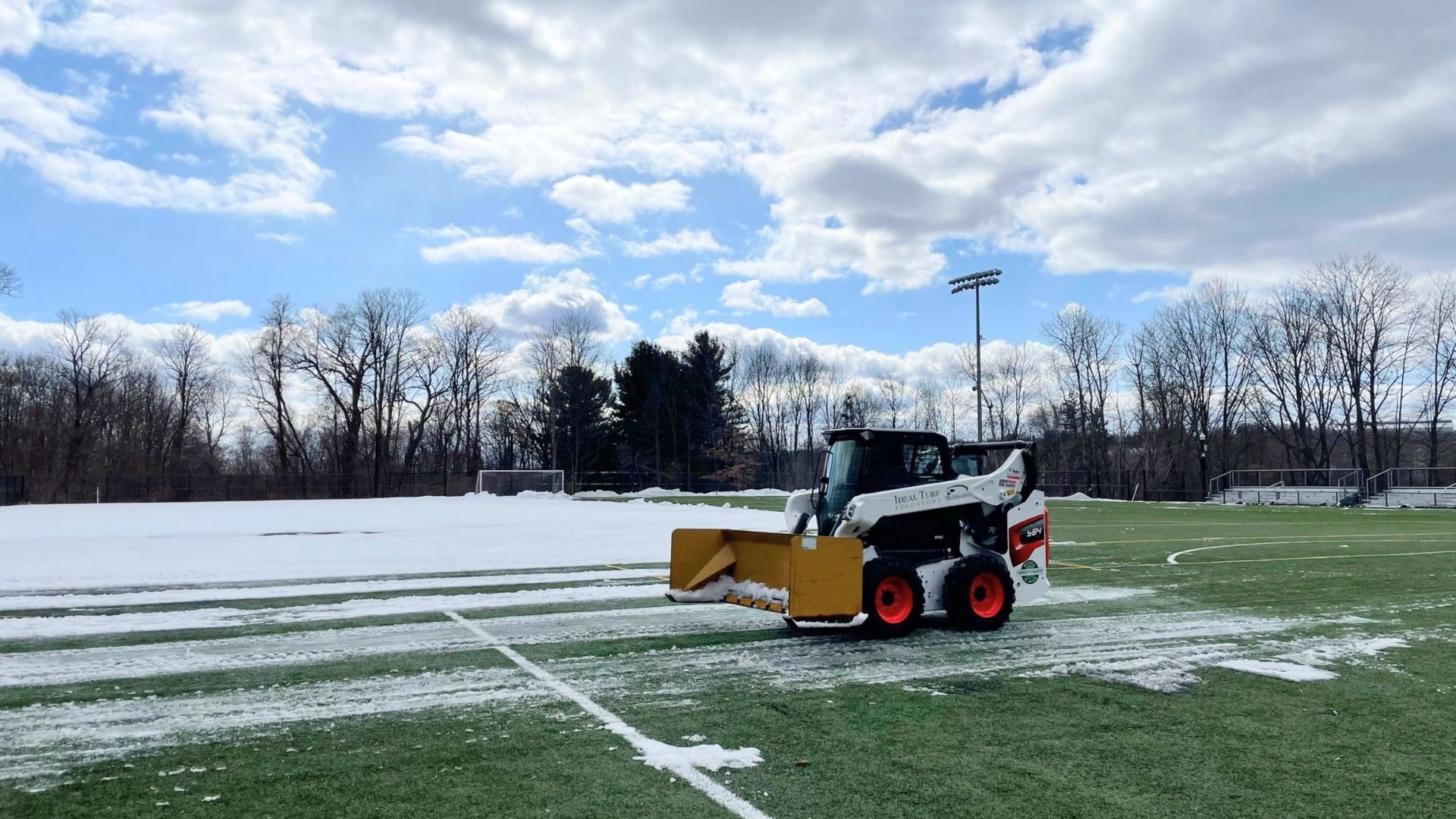
The tools you use matter just as much as when you clear snow. Many winter turf issues stem from scraping or cutting fibers with equipment designed for concrete, not synthetic grass. Choosing the right tools is essential for turf-safe snow removal and long-term surface health.
These tools remove snow without tearing fibers or damaging the turf backing:
Using these tools supports safe snow clearing for turf, especially during frequent Buffalo snow events.
Some tools may seem effective, but can cause permanent damage:
Avoiding these tools is critical when trying to remove snow from turf safely, especially after ice has formed.
Choosing turf-safe tools keeps removal efficient while protecting the surface that was designed to last for years. But even the safest tools can cause damage if used incorrectly.
Technique plays just as big a role as equipment.
Even with the right tools, technique matters. Artificial turf fibers are resilient, but they can bend, twist, and mat down if snow is handled improperly. Proper technique reduces stress on the surface and keeps the turf looking consistent through winter.
1. Use a Lifting Motion, Not a Scraping One
When clearing snow, lift it away from the surface instead of dragging tools across the turf. Scraping compresses fibers and pulls infill out of place. A gentle lift-and-push approach helps remove snow from turf safely without flattening the pile.
2. Work With the Grain of the Turf
Turf fibers are installed in a uniform direction. Clearing snow in that same direction helps fibers return to an upright position once the snow is gone. Working against the grain increases matting and makes grooming more difficult later.
3. Avoid High, Concentrated Snow Piles
Where you place snow matters.
Spreading snow evenly or moving it off the turf entirely reduces long-term stress and supports handling snow on turf the right way.
4. Leave a Thin Snow Layer When Needed
Trying to clear turf down to bare fibers during icy conditions often causes more damage than leaving a thin protective layer. A small snow cushion reduces direct tool contact and limits fiber abrasion until conditions improve.
5. Light Grooming After Thawing
Once temperatures rise and the turf surface softens, a soft broom can help lift compressed fibers. This step restores appearance and improves drainage before the next snowfall.
Using careful technique ensures safe snow clearing for turf throughout the season, not just during the first storm.
Also Read: How to Melt Snow on Your Lawn Safely?
Many winter habits come from caring for natural grass. Understanding why those habits do not always apply to turf helps avoid costly mistakes.
Many winter maintenance habits come from caring for natural grass, but those same habits do not always translate well to artificial turf. Understanding the differences helps prevent avoidable damage during snow removal.
Recognizing these differences helps homeowners adjust winter habits and use safe snow clearing for turf methods that protect the surface rather than shorten its lifespan.
Chemical deicers are often used without much thought. On artificial turf, that decision deserves more caution.

Ice melt can be used on artificial turf, but only with care. Buffalo winters often bring refreezing conditions that turn melted snow into hard ice overnight. The wrong product, or too much of the right one, can damage turf faster than ice itself.
Ice melt should be a last step, not the default solution. It makes sense when:
Using ice melt sparingly supports safe snow clearing for turf without introducing unnecessary chemical stress.
Not all ice melt products are equal. Turf-safe options typically:
Products designed for pets and concrete often perform better on turf, but they should still be applied lightly.
Some deicers cause long-term turf damage and should be avoided entirely:
These materials can degrade fibers, affect the backing layer, and interfere with drainage, especially during repeated freeze-thaw cycles.
Proper application matters as much as product choice.
Overapplication often leads to residue buildup, which increases surface stiffness and complicates snow cleanup for turfgrass later in the season.
Combining mechanical removal with limited, targeted ice melt use is the safest approach for long-term turf performance.
If ice buildup is a recurring issue on your turf, a targeted winter plan can reduce the frequency with which deicers are needed. Percy's Lawn Care evaluates drainage, shade patterns, and traffic flow to minimize ice formation in the first place.
Some turf areas can be managed with careful DIY snow removal. Others benefit from professional help, especially in Buffalo, where winter conditions can change quickly, and snow loads build up quickly.
Knowing when to call a professional helps protect the turf and avoid costly repairs.
Artificial turf used for frequent foot traffic, pets, or commercial access wears faster in winter. Repeated clearing, compaction, and refreezing increase the risk of fiber damage. Professional crews use turf-safe methods designed for consistent use, not one-time cleanup.
Back-to-back snowstorms make timing critical. Letting snow pile up increases compression and ice bonding. A professional snow plan keeps accumulation manageable and supports safe snow clearing for turf throughout the season, not just after major storms.
When ice bonds tightly to turf fibers, forceful removal causes damage. Professionals know when to pause removal, apply turf-safe deicing methods, or wait for temperature shifts before continuing. This prevents tearing and backing stress.
If meltwater pools or refreezes under the turf, drainage may be blocked. Professionals can identify problem areas early and adjust snow placement to prevent long-term issues that complicate handling snow on turf later.
Property managers often need reliable access and a consistent appearance. Professional turf snow removal reduces liability risks and keeps surfaces functional without sacrificing turf integrity.
Calling a professional is not about convenience alone. It is about preserving the turf surface and extending its lifespan under Buffalo's demanding winter conditions.
Artificial turf requires a different approach to winter than traditional lawns. At Percy's Lawn Care, snow removal is planned with surface protection in mind, not just speed. With experience serving Buffalo-area properties since 1999, the team understands how heavy snow, ice buildup, and freeze-thaw cycles affect turf over time.
Support for homeowners with artificial turf goes beyond basic clearing:
For homeowners looking to protect artificial turf while keeping their property accessible year-round, Percy's Lawn Care offers practical, surface-safe solutions tailored to Buffalo's climate.
For seasonal planning or turf-safe snow service, contact Percy's Lawn Care at (716) 245-5296 or hello@percyslawncare.com.
Artificial turf holds up well in winter, but only when snow removal is handled with intention. Clearing snow early, limiting compaction, using turf-safe tools, and managing ice before it bonds all help preserve fiber structure and drainage. Small decisions after each snowfall make a measurable difference by the time spring arrives.
A steady approach to artificial turf snow removal keeps surfaces usable, reduces long-term wear, and protects the investment beneath the snow.
Percy's Lawn Care has supported homeowners across Buffalo, Amherst, and Cheektowaga since 1999 with year-round property care and snow removal that respects the surfaces it serves. Reach out for a free on-site consultation and prepare your turf for the season ahead.
Q. Does snow damage artificial turf if it stays covered for weeks?
A. Snow alone usually does not damage turf, but long-term compaction and refreezing can. Problems start when snow is walked on repeatedly or when it turns into bonded ice, which stresses fibers and backing layers.
Q. Can artificial turf crack or harden in extreme cold?
A. Quality turf is built to handle freezing temperatures, but repeated freeze-thaw cycles can make the surface feel firmer. Proper drainage and careful snow removal help prevent long-term stiffness.
Q. Is it safe to shovel artificial turf every time it snows?
A. Not always. Frequent shoveling with the wrong tools or during icy conditions can cause more harm than leaving light snow in place temporarily. Timing and technique matter more than frequency.
Q. Will plowed snow piles ruin the edges of artificial turf?
A. Yes, if snow is repeatedly dumped along turf edges. Heavy piles block drainage and increase refreezing, which can weaken seams and edge restraints over time.
Q. Should artificial turf be professionally inspected after winter?
A. It can be helpful, especially after heavy snowfall seasons. A post-winter check can identify compacted infill, drainage issues, or fiber matting before spring use increases.