For homeowners in snow-prone regions like Western New York, a driveway isn't just part of the landscaping. It's one of the hardest-working surfaces on the property during winter. Repeated cycles of snow, melt, and refreeze weaken pavement over time in a process known as the freeze-thaw cycle.
This can expand water trapped in tiny cracks as it freezes, exerting pressure on the surface. Driveways that appear intact in the fall can sustain significant damage by spring if moisture infiltrates and repeatedly freezes. If left unaddressed, a driveway's effective lifespan can shorten, turning a simple winter surface into a costly spring repair project.
This blog helps homeowners understand the process of preparing driveway for snow in a way that protects the surface from winter damage, reduces ice buildup, and prevents minor issues from becoming expensive repairs.
Most driveway damage blamed on winter actually begins before the first snowfall. Snow and ice don't destroy driveways on their own. The real damage comes from water infiltration combined with repeated freeze–thaw cycles.
Western New York is particularly hard on driveways because winter temperatures often hover around freezing. Regions with frequent freeze–thaw cycles can experience significantly faster surface deterioration than colder areas with more stable temperatures.
Several winter-specific factors accelerate this damage:
The key takeaway is simple: driveway failure is usually progressive, not sudden. The damage you see in spring is often the result of small winter decisions made weeks or months earlier.
That's why preparing your driveway for snow is less about reacting to storms and more about preventing water, ice, and stress from taking hold in the first place.
Suggested Read: Driveway Snow Plowing Guide
Let's walk through some proven steps homeowners can take to protect their driveways before and throughout winter.
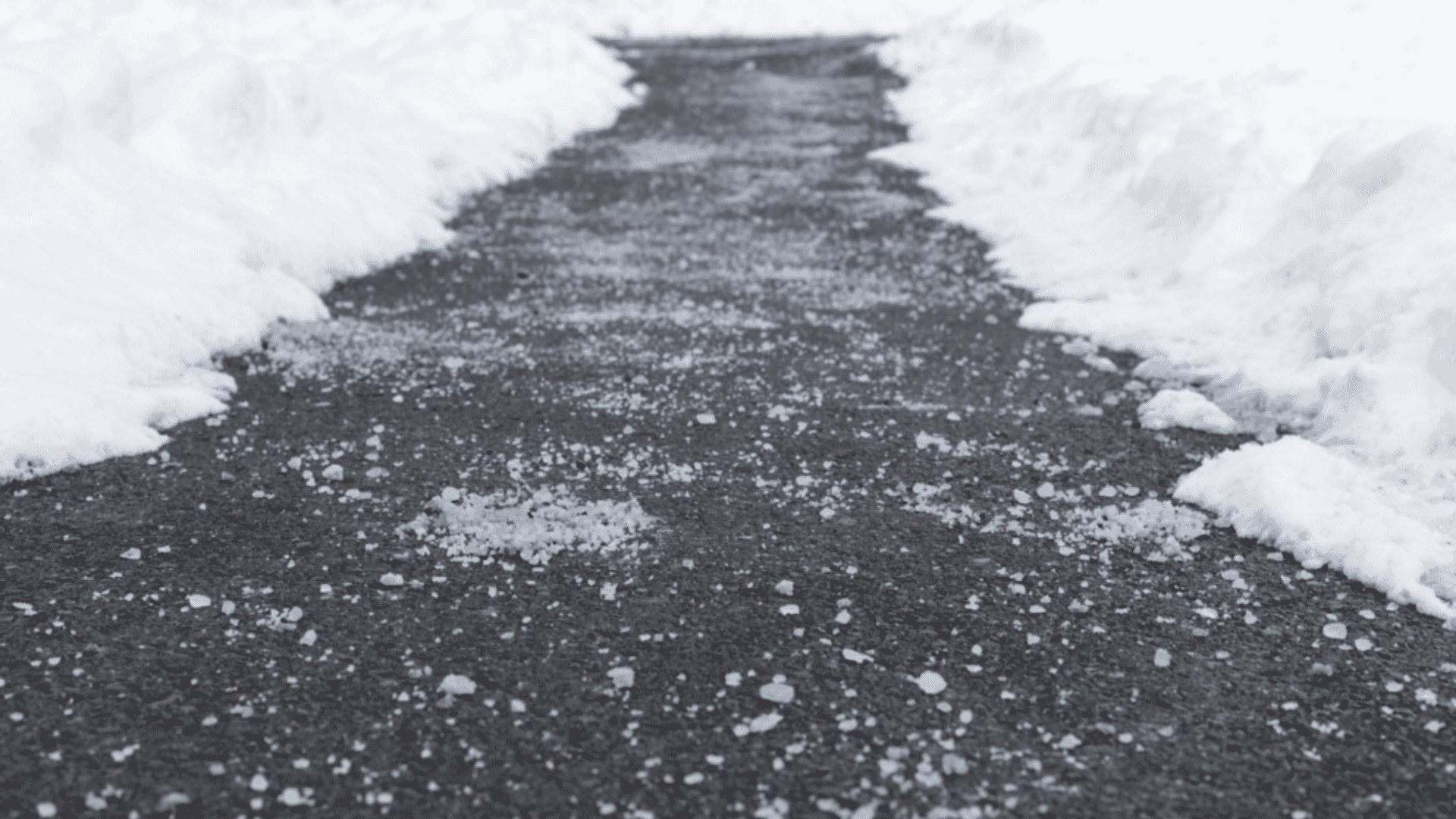
Preparing a driveway for snow is not about reacting to the first storm. It's about reducing moisture exposure, limiting freeze-thaw stress, and avoiding surface damage that compounds over the winter.
Each step below addresses a specific failure point that commonly leads to cracked, icy, or uneven driveways by spring.
Hairline cracks and surface gaps may look harmless in the fall, but they are the primary entry points for water. Once winter starts, any moisture trapped in those openings expands as it freezes, widening the crack.
Even small, untreated cracks allow enough moisture intrusion to significantly accelerate freeze-thaw damage over a single winter. Addressing minor surface issues early helps prevent water from pooling before snow and ice arrive.
Focus on:
Standing water is one of the biggest contributors to winter driveway damage. When water cannot drain away, it freezes in place, creating ice sheets and increasing pressure on the surface below.
Poor drainage can be a leading cause of surface deterioration in cold climates, even more than snowfall itself.
Before winter:
Not all ice melt products are surface-safe. Some commonly used salts lower the freezing point effectively but also increase moisture absorption, which worsens freeze-thaw damage over time.
Concrete and asphalt respond differently to de-icers, and heavy overuse can lead to surface scaling, flaking, or accelerated wear.
Key principles:
Snow doesn't just disappear. Where it's piled matters.
Repeatedly stacking snow in the same areas increases moisture exposure and weight along driveway edges, which are already structurally weaker. Over the course of a winter, this contributes to edge cracking, sinking, and uneven thawing.
Before snowfall:
Scraping damage often happens when homeowners rush to clear snow with the wrong tools or improper technique. Metal shovels, dull edges, and hurried clearing can gouge surfaces and expose fresh areas to moisture.
Staging tools ahead of time reduces rushed decisions and helps prevent surface abrasion during early storms when the driveway is most vulnerable.
Prep includes:
Waiting for the snow to compact underfoot makes removal harder and increases ice bonding. Once snow compresses and partially melts, it refreezes into a dense layer that often requires force to remove.
Clearing snow in stages:
Early, incremental clearing can reduce slip risk and physical strain compared to delayed, heavy shoveling.
One good clearing does not protect a driveway for the season. Damage builds up through repeated storms, freeze-thaw cycles, and moisture exposure.
Ongoing protection means:
Driveways that are managed consistently through winter show less surface damage and faster recovery in spring than those treated sporadically.
If the same driveway issues return every year despite following these steps, the strategy may need to be adjusted. Percy's Lawn Care can review what's happening on your property and recommend winter management changes that actually prevent repeat damage. Schedule a call today!
Up next, let's cover common driveway mistakes that lead to expensive spring repairs, many of which homeowners don't realize they're making during winter.
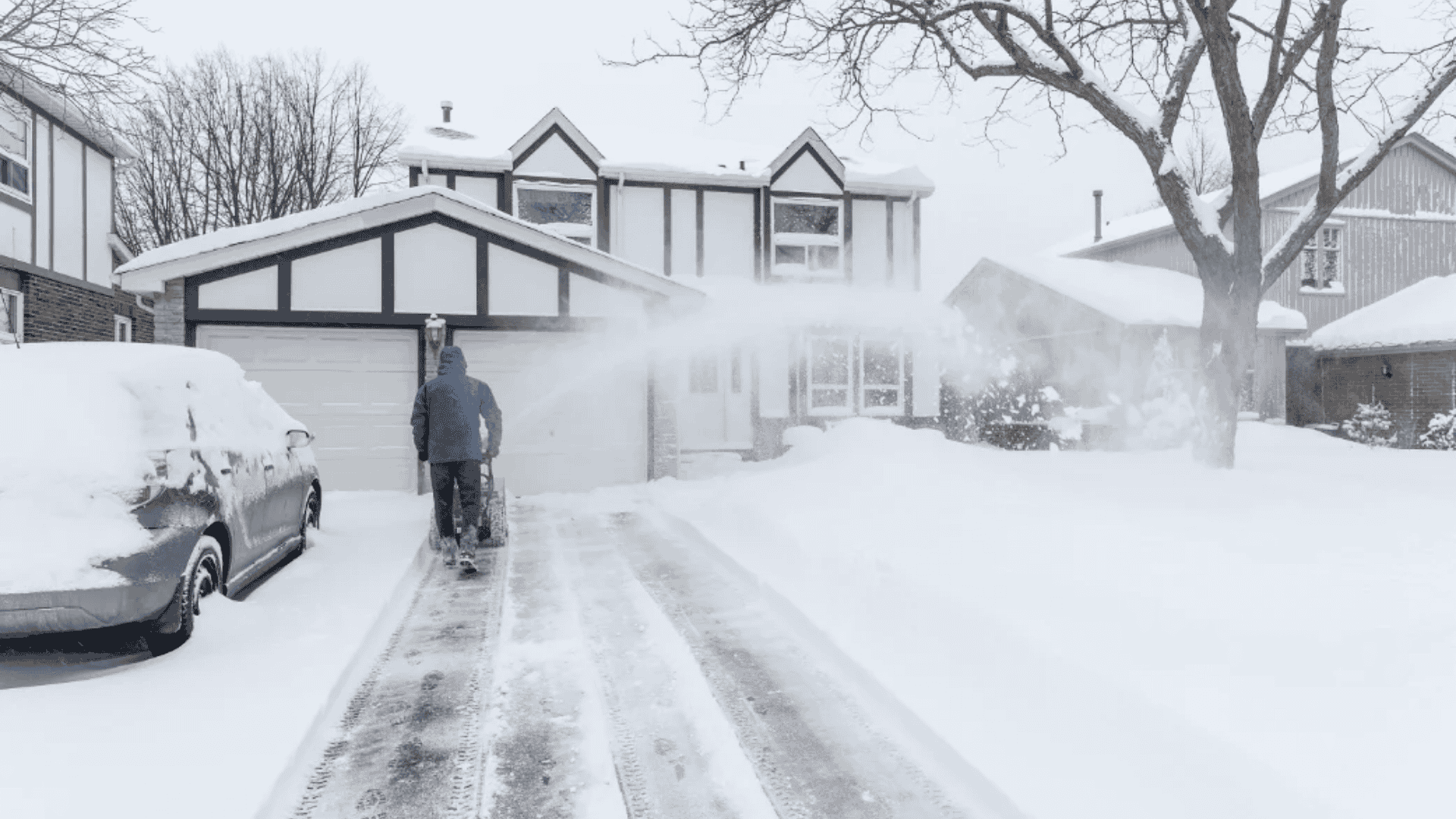
Many driveway issues show up every spring, even when homeowners feel they "did everything right" during winter. The reason is simple: some problems aren't caused by what you do, but by how winter conditions interact with the driveway over time.
Here are the most common repeat problems, why they happen, and how to correct them.
If certain areas of your driveway refreeze no matter how often you clear or salt them, the issue is rarely snowfall. It's usually water movement.
Why does it happen?
What fixes it:
This is one of the most frustrating outcomes for homeowners. Damage often becomes visible after winter stress ends, not during it.
Why does it happen?
What fixes it:
Edge deterioration is common and often mistaken for poor construction.
Why does it happen?
What fixes it:
Many homeowners notice they need more product later in the season.
Why does it happen?
What fixes it:
Snow removal often feels harder in February than in December.
Why does it happen?
What fixes it:
Recurring winter driveway problems are rarely caused by one mistake. They're caused by small, repeated decisions interacting with water, temperature, and time.
Solving them means adjusting strategy, not working harder.
Preparing a driveway for snow isn't just about clearing it after a storm. It's about preventing ice bonding, surface damage, and repeated freeze-thaw stress that lead to cracking and costly spring repairs.
At Percy's Lawn Care, winter services are built around consistency and surface protection, not rushed clearing. As a family-owned company serving Western New York since 1999, the team understands how snow placement, de-icing timing, and clearing techniques affect driveway conditions throughout the winter.
Support for homeowners includes:
For homeowners who want their driveway to come out of winter in better shape, not worse, Percy's Lawn Care offers free on-site consultations to plan winter snow management with long-term protection in mind.
You can reach Percy's Lawn Care at (716) 245-5296 or hello@percyslawncare.com to discuss winter driveway care and seasonal planning.
Driveway damage doesn't usually come from one heavy snowfall. It builds over time through moisture intrusion, ice bonding, and repeated freeze–thaw stress.
Small winter habits make a measurable difference. Clearing before snow compacts, using de-icer strategically, and protecting edges and drainage paths help keep driveways safer to use and structurally sound through the season.
Percy's Lawn Care helps homeowners across Western New York manage winter conditions with a focus on long-term property protection rather than just short-term clearing. When driveway care is part of a steady winter plan, spring starts with fewer surprises and less repair work.
For homeowners who want winter snow management handled consistently, with surface protection in mind, schedule free on-site consultations to plan ahead with confidence.
Q. Should I seal my driveway every year before winter?
Not always. Most concrete and asphalt driveways benefit from sealing every few years, not annually. Over-sealing can trap moisture, which may worsen freeze–thaw damage rather than prevent it.
Q. Is asphalt or concrete better for snowy winters?
Both perform well if maintained properly. Asphalt is more flexible during freeze–thaw cycles, while concrete resists deformation but is more sensitive to de-icing chemicals and surface scaling.
Q. Can snow plows damage residential driveways?
Yes, especially if edges are unmarked or snow is scraped aggressively. Repeated plow contact near edges and transitions can cause chipping, cracking, and surface wear over time.
Q. Why does my driveway ice over even when temperatures stay below freezing?
Ice often forms from meltwater caused by sun exposure, vehicle heat, or nearby runoff, not just temperature changes. That water refreezes overnight, creating persistent ice patches.
Q. When should I stop using de-icer and switch to mechanical removal?
If ice keeps returning in the same spots, de-icer alone won't solve the issue. At that point, focusing on snow removal timing, drainage, and moisture control is more effective than adding more product.